Showing posts with label gratitude practice. Show all posts

Wednesday, 7 October 2026

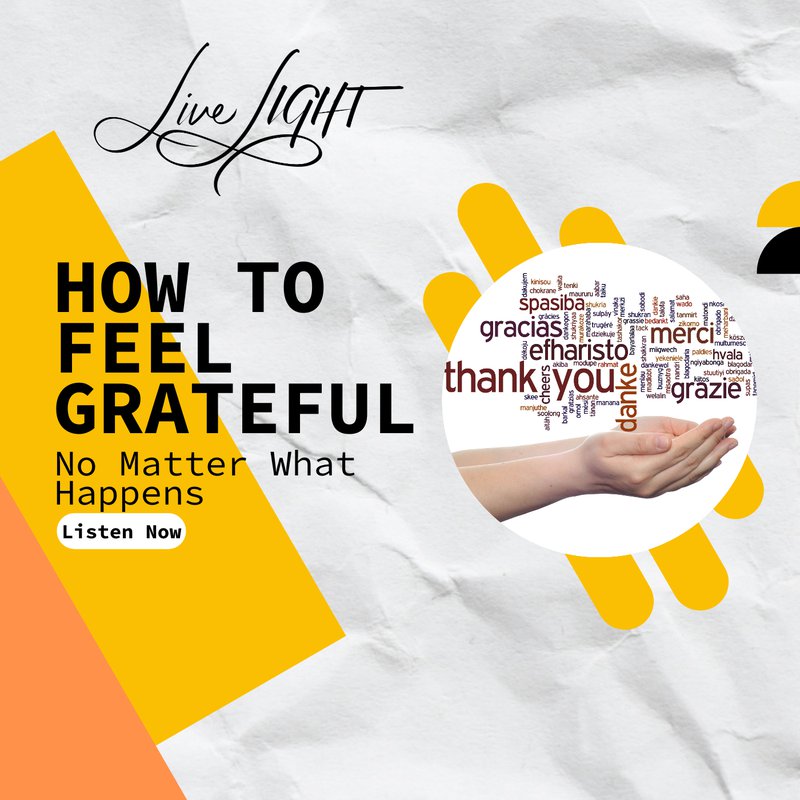
How to Feel Grateful No Matter What Happens

​Learn how to feel grateful no matter what happens, shift your perspective, find peace in hard times, and build a lasting daily gratitude habit today.

​Trevor H Lund helps capable and caring people—who are growing weary in doing good—move from striving and stress to peace and purpose as they rediscover and enjoy the life God created them for. He does this as an encourager, writer, and authorpreneur. He encourages through his blog, podcast, and live casts at https://revtrev.com/, shares his writing at https://trevorlund.com/, and teaches in Live LIGHT Academy at https://livelight.ca/.

​Listen to how to feel grateful

Subscribe where you listen to podcast https://revtrev.com/radio

Watch the Teaching of how to feel grateful

Subscribe and set notification on YouTube https://revtrev.com/tv

Replay of Live Cast on How to Feel Grateful

Subscribe and set notification on YouTube https://revtrev.com/tv

Summary of How to Feel Grateful

This guide explores how to feel grateful no matter what happens by grounding gratitude in God’s character rather than changing circumstances or temporary emotions. It explains why the third week of a gratitude challenge can feel flat, what wholehearted gratitude means, and why feelings often need time to follow a deliberate decision. The post also discusses a longer process of developing a lasting habit and introduces a practical Name, Notice, Thank routine. Specific examples, honest prayers, and appreciation for other people make the practice more personal and actionable. Readers will learn how gratitude can coexist with sadness, uncertainty, and fatigue while gradually reshaping attention, relationships, and daily prayer.
how to feel grateful

Read: How to Feel Grateful No Matter What Happens

Learning how to feel grateful no matter what happens does not mean pretending that life is easy. It does not require ignoring grief, fear, disappointment, or uncertainty. Instead, it means learning where to place your attention when circumstances are difficult.

Gratitude can begin as a decision before it becomes an emotion. You may choose to thank God while still feeling tired or discouraged. Over time, that decision can create room for genuine gratitude to grow.

This process takes patience. If you are several weeks into a gratitude practice and still feel emotionally flat, you have not necessarily failed. You may be in the part of the process where consistency matters most.

Why Week Three of a Gratitude Practice Can Feel Discouraging

Many people begin a gratitude challenge with enthusiasm. At first, the practice feels fresh. Writing down what you appreciate or saying prayers of thanks can seem natural and meaningful.

Then the excitement fades.

Around the third week, gratitude may begin to feel repetitive. You may still complete the practice, but the emotional response you expected has not arrived. This is often the point when people assume they are doing something wrong.

That conclusion is not necessary. Feeling little change does not mean your faith is weak or your practice is ineffective. It may simply mean that your emotions have not yet caught up with your decision.

Psalm 118:1 provides an important foundation:

“Give thanks to the Lord, for he is good; his faithful love endures forever.”

Notice that this verse does not base gratitude on a pleasant day, a successful outcome, or a positive mood. The reason for giving thanks is God’s goodness and enduring love.

That distinction matters. If gratitude depends entirely on circumstances, it will rise and fall whenever circumstances change. But when gratitude is rooted in God’s character, it has a steadier foundation.

You can feel tired and still thank God for rest. You can feel sad and still thank God for someone who remains near. You can feel uncertain and still thank God that his love does not depend on your confidence.

Gratitude does not erase the difficult emotion. It gives you another truth to hold alongside it.

Your Feelings Can Follow Your Focus

What receives your attention often becomes more prominent in your experience. When you continually focus on loss, fear, or frustration, those emotions can become larger and more consuming.

Turning your attention toward God’s goodness does not deny what is happening. It is not an instruction to pretend that pain is absent. Instead, it is a decision to notice more than the painful circumstance.

This is honest attention.

You might acknowledge that a situation is difficult while also noticing a kindness, a provision, a relationship, or a moment of rest. Both realities can exist at once. The hardship may still be real, but it no longer has your undivided attention.

That is one reason gratitude can be practiced even before it is felt. You begin by choosing where to look. As you repeatedly direct your attention toward what is good, your emotions may gradually begin to respond.

What Wholehearted Gratitude Really Means

The phrase “give thanks with your whole heart” can sound like it refers only to a strong feeling. But wholehearted gratitude involves more than emotion.

In the Hebrew understanding described in the script, the heart includes decisions, emotions, and actions. These three elements work together:

  1. Decision: You choose to give thanks for something specific.
  2. Emotion: You experience genuine appreciation for what you have identified.
  3. Action: You express that appreciation through words, writing, prayer, or worship.

The decision is often the easiest part. You can choose to thank God before you feel enthusiastic or emotionally moved. The action is also practical. You can write a sentence, speak a prayer, or express appreciation to another person.

The emotion is usually more difficult. Feelings cannot always be switched on by command. If you are waiting to feel grateful before beginning, you may remain stuck.

This does not mean that your faith is weak. It means that your emotions may need time and repetition. Rather than saying that your heart must catch up to your head, it may be more accurate to say that your emotions need time to follow your decision.

You decide to give thanks. Then you continue making space for the feeling to develop.

The words “his faithful love endures forever” provide a firm place for that process. People change. Health changes. Plans change. Circumstances change. The faithfulness of God’s love remains the foundation beneath those changes.

How Long Does It Take for Gratitude to Feel Natural?

There is no single timeline that applies identically to everyone. Still, the script presents a gradual process rather than an instant transformation.

The first noticeable shift may occur after about 21 days of consistent gratitude practice. The deeper change—when gratitude begins to feel more automatic—may require several cycles of that practice, or approximately 63 to 70 days.

That is why a 70-day challenge can be useful. The third week is not necessarily the finish line. It may not even represent the point where the deepest change becomes visible.

Habit research discussed in the script, including work associated with Phillippa Lally and her team, found that a new behaviour took a median of about 66 days to become automatic. The time varied among individuals, and some people needed considerably longer.

This timeline should be treated as a guide, not a deadline. If gratitude still feels deliberate after several weeks, that does not mean you should stop. Repetition is part of the process.

The script also refers to studies by Robert Emmons and Michael McCullough involving gratitude journals. In that research, participants who wrote about things they appreciated showed outcomes including greater optimism, improved views of their lives, more exercise, and fewer visits to doctors.

Another study described in the script followed adults dealing with serious illness during a 21-day gratitude practice. Participants reported more energy, stronger connection, better sleep, and a more hopeful view of life.

These findings do not mean gratitude removes hardship or guarantees a specific result. They do suggest that regularly directing attention toward appreciation can influence how people experience their lives.

The script also mentions the American Brain Foundation’s explanation that gratitude activates areas associated with decision-making and emotional awareness, influences dopamine, and calms the amygdala, which is involved in the stress response. In this view, repeated gratitude helps build new patterns of attention and response.

A Personal Example of Gratitude Becoming More Natural

The script describes a personal experience with a 70-day gratitude challenge.

Around day eight, the person noticed that they had begun singing praise songs to God without deliberately trying to create that response. The experience was unexpected.

Around day fifty, another shift became clear: gratitude no longer felt like something they had to force. Once they decided to give thanks, the feeling began to come more readily.

The practice continued in prayer for more than two years, and most days gratitude occurred without the same sense of effort.

This example does not establish a guaranteed timeline for everyone. It illustrates what can happen when a decision is repeated long enough for the emotional response to develop.

The Name, Notice, Thank Practice

A simple daily pattern can help you continue when gratitude feels difficult:

1. Name your strongest emotion

Begin honestly. Identify what you are feeling most strongly.

You may feel sad, worried, angry, tired, grateful, or uncertain. The goal is not to choose the emotion that sounds most spiritual. The goal is to acknowledge what is actually present.

Naming the emotion keeps the practice grounded in reality.

2. Notice how God meets you in that emotion

After naming your feeling, look for one way God’s care is present.

If you feel tired, you might notice an opportunity to rest. If you feel sad, you might recognize the person who stays close. If you feel uncertain, you might remember that God’s love does not depend on your ability to feel certain.

This step does not require you to explain the entire situation. Look for one specific point of care.

3. Thank God in one sentence

Express your gratitude directly and simply.

For example, you might thank God for the person who encouraged you, the rest available to you, or the faithfulness you are trying to remember. One honest sentence is enough to begin.

4. Tell one person why you appreciate them

Gratitude is not only an internal or private practice. Each day, identify one person and explain what you appreciate about them.

Specific appreciation can strengthen your awareness of the care others provide. It can also encourage you to listen more closely, notice more carefully, and remember acts of kindness that might otherwise pass unnoticed.

Why Specific Gratitude Matters

General statements can be difficult to feel deeply. “I am thankful for my family” may be true, but it leaves your attention broad and undefined.

Specific gratitude gives your mind something concrete to notice.

Instead of saying, “I am thankful for my children,” identify a particular action: perhaps your daughter offered to host the entire family for Thanksgiving. Instead of saying, “I am thankful for my dog,” remember the way your dog nudged you when you were sad.

Specific details make appreciation more personal. They also help you revisit the moment rather than simply naming a category.

When you write or pray, add depth where you can:

  • What happened?
  • Who was involved?
  • What did the person do?
  • Why did it matter to you?
  • How did you experience God’s care through it?

The point is not to produce a polished paragraph. The point is to pay attention.

A Simple Prayer for Difficult Days

Some days, you may be too tired or discouraged to find your own words. A simple pattern can help:

“Lord, today I feel what I’m feeling. I notice your care through what you’ve placed in front of me. Thank you for what you’ve given. Help my heart trust your goodness.”

You can adapt the wording to your situation. The prayer begins with honesty rather than denial. It acknowledges the emotion, identifies care, expresses thanks, and asks for help trusting God’s goodness.

That sequence makes room for both truth and gratitude.

Gratitude Can Change How You Relate to People

As you practice thanking God for specific people, you may begin to notice their care more clearly. Attention affects relationships.

When you recognize someone’s effort, you may become more patient with them. When you remember what they have done, you may listen more carefully. When you express appreciation, you reinforce the habit of seeing their contribution rather than focusing only on their shortcomings.

A grateful heart pays attention. It listens, remembers, and responds.

This does not mean every relationship becomes easy. It means gratitude can influence the way you see and engage with the people around you.

How to Feel Grateful No Matter What Happens

The goal is not to become grateful because life has become simple. The goal is to allow your response to change even when your circumstances do not.

Wholehearted gratitude begins with a decision, grows into an emotion, and becomes visible through action. The process may feel slow, especially during the third week of a challenge. That flatness is not proof that nothing is happening.

Continue by naming your emotion, noticing God’s care, thanking him specifically, and expressing appreciation to someone else. Give your emotions time to follow your decision.

Learning how to feel grateful no matter what happens means grounding your gratitude in God’s goodness and faithful love rather than in a temporary outcome. Week three may not be where the practice ends. It may be where the change begins.

Join the Live LIGHT 70-Day Gratitude Challenge Today https://revtrev.link/thanks

how to feel grateful

Wednesday, 30 September 2026

Feeling Gratitude for Simple Things

​Feeling gratitude for simple things can change the way you experience each day. In this message, discover how appreciating small blessings—such as a quiet moment, a kind word, time with loved ones, or a beautiful view—can support greater joy, peace, and contentment.

Links included

Psalms of Lament https://revtrev.com/psalms
Download the Our Father Prayer Rhythm https://revtrev.link/pray
Learn more about the Live Light 70-day Gratitude Challenge https://revtrev.link/thanks

#gratitude, #gratitudepractice, #simplethingsinlife

Practice gratitude by noticing the good around you and making appreciation part of your daily routine. Small moments often have the power to create a more positive mindset and a meaningful life.

Trevor H Lund helps capable and caring people—who are growing weary in doing good—move from striving and stress to peace and purpose as they rediscover and enjoy the life God created them for. He does this as an encourager, writer, and authorpreneur. He encourages through his blog, podcast, and live casts at https://revtrev.com/, shares his writing at https://trevorlund.com/, and teaches in Live LIGHT Academy at https://livelight.ca/.

Feeling Gratitude for Simple things

Listen to Feeling Gratitude for Simple Things

Subscribe where you listen to podcasts https://revtrev.com/radio

Watch the Teaching of Feeling Gratitude for Simple Things

Subscribe and set notifications https://revtrev.com/tv

Watch the Replay of the Live Cast Feeling Gratitude for Simple Things

Summary of Feeling Gratitude for Simple Things

Gratitude for simple things can become a steady spiritual practice, even when life includes fear, illness, grief, or uncertainty. This post explores how ordinary blessings often become invisible when familiarity turns gifts into expectations. Drawing on 1 Thessalonians 5:16–18, it connects joy, prayer, and thankfulness while emphasizing that gratitude does not require denying pain. A personal medical experience illustrates how honest prayer and trust can make room for peace during a frightening complication. The post also presents a practical framework for developing gratitude: decide to notice, feel appreciation for a specific gift, and express that appreciation through action. Finally, it explains how a consistent 70-day practice can help gratitude become more automatic.

Read Feeling Gratitude for Simple Things Can Transform Difficult Days

A nurse once told me I had far too much joy for someone in my situation. She was right: I was lying in a pool of my own blood after a medical complication.

Yet I was not pretending everything was fine. I had already poured out my fear and complaint to God in prayer with thanksgiving. That honest prayer made room for something I did not expect: peace, appreciation, and joy in the middle of a frightening moment.

The Bible connects joy, prayer, and thankfulness in 1 Thessalonians 5:16–18: “Always be joyful, never stop praying, be thankful in all circumstances, for this is God’s will for you who belong to Christ Jesus.”

This does not mean every situation feels easy. It means gratitude for simple things can become a way of noticing God’s care, even when life feels anything but simple.

Why Everyday Blessings Become Invisible

When life gets busy, gratitude is often one of the first things to disappear.

You wake up and the day immediately begins making demands. There is a meal on the table, a safe place to sleep, a message from a friend, a warm drink, strength for the day, a quiet moment, meaningful work, someone willing to listen, or another opportunity to begin again.

These gifts may seem small because they are familiar. But familiar gifts still deserve thanks.

The problem begins when daily blessings stop feeling like gifts and start feeling like rights. You may move from “Thank you, God,” to “Of course I have this,” without noticing the change.

Consider what you might now treat as an entitlement even though you once recognized it as a blessing:

  • A spouse or friend who helps with ordinary responsibilities
  • A vehicle that starts each morning
  • A body that continues to carry you through the day
  • A home where you can rest
  • Food that is available when you are hungry
  • Someone who listens when you need to speak
  • The opportunity to begin again after a difficult day

When gratitude disappears, entitlement can quietly take its place. Entitlement steals joy before you realize it is gone.

Gratitude for Simple Things Begins With Attention

In the ancient Hebrew understanding, the heart is more than the center of emotion. It is also connected with decisions and actions.

That gives “wholehearted gratitude” a deeper meaning. Gratitude involves three connected movements:

  1. You decide to notice.
  2. You feel thankful for what you notice.
  3. You express appreciation through action, worship, or service.

Many people stop at the first step, if they reach it at all. They may notice a blessing briefly but never pause to feel gratitude or respond meaningfully.

A thankful heart therefore requires attention. You deliberately look at what is in front of you and recognize it as a gift rather than assuming it is owed to you.

This practice may begin with something very ordinary. You might notice the food you nearly rushed past, the safe journey home, the person who checked on you, or the breath you just took.

Attention forms part of worship because it redirects your focus. Instead of seeing only what is missing, you begin to recognize what has already been given.

A Medical Crisis That Revealed Unexpected Joy

Before traveling to New Zealand for our son’s graduation and wedding, I was waiting for cardiac ablation surgery. My heart would sometimes beat irregularly, my watch repeatedly alerted me, and I had visited the emergency room several times for ECGs.

I was also taking special blood thinners so medical staff could use paddles if the irregular rhythm happened again.

The surgery was scheduled for the week before our trip. I asked the nurse arranging it whether travelling to the other side of the world the following week could create a problem. She explained that the medical team would not want me to experience complications out of province and said she would try to reschedule the procedure for after I returned.

The word “complications” stayed with me.

I had already experienced too many health complications, and I did not want another one. After thinking about it for several days, I finally brought the fear to God. I poured out my complaint honestly.

God does not need us to hide what is on our hearts. He knows us more deeply than we know ourselves. As I prayed, I remembered previous health complications and the ways I had experienced God’s presence and help through them. I sensed the question: Would I trust Him with any complication this time?

I chose to trust Him, and I experienced peace. Through prayer, I exchanged my problems for His peace.

The surgery itself went well, although there was a complication. I had to remain lying on my back without sitting up. Nurses found a hematoma beginning to form and worked to resolve it. At one point, I nearly passed out and felt sick, but they gave me a drip and orange juice, and I began to recover.

Later, as two nurses changed the dressings on each side, the nurse working on the left noticed that the right side had started bleeding. He called the other nurse back while pressure was applied. She pressed harder, and I began to feel as though I might become sick or lose consciousness again.

Once more, I received medical support and orange juice. Gradually, I felt better.

Throughout the process, I appreciated the nurse who was working overtime to help me get home as soon as possible. I thanked her and told her I was grateful.

She replied, “You have far too much joy for the situation you’re in right now.”

She was right. I was lying in a pool of my own blood. But my laughter was not denial or delusion. I was at peace. I believed God was with me and would use the experience for good.

I was grateful that the complication happened in the hospital, where trained people could help me, rather than at home.

Joy, Prayer, and Thankfulness Belong Together

Paul’s words in 1 Thessalonians connect three practices: joy, prayer, and gratitude.

They work together like a three-strand cord.

Prayer helps you notice what you often overlook. When you slow down before God, you become more aware of the meal on the table, the person beside you, and the strength that carried you through the day.

Prayer moves your attention from demand to relationship. Instead of approaching God only with requests, you become aware of His presence and care.

This does not mean Christians must force themselves to feel cheerful. Biblical joy is not the same as pretending that circumstances are pleasant. It is possible to experience joy because of God’s presence while still feeling fear, grief, disappointment, or physical pain.

Psalm 118:24 says, “This is the day the Lord has made. We will rejoice and be glad in it.”

That verse does not promise that every day will feel easy. It points to a different truth: every day belongs to God. You receive the present day as a gift rather than treating it as something guaranteed or owed to you.

Gratitude Does Not Cancel Grief

“Give thanks in all circumstances” is sometimes misunderstood as an instruction to smile through every painful event. But gratitude does not require you to call suffering good or pretend that loss does not hurt.

You may feel grief and gratitude at the same time.

You may face pressure and still thank God for His presence. You may lack an answer and still trust His care. You may feel afraid while recognizing that you are not alone.

Gratitude does not deny hardship. It gives hardship its proper place.

A difficult day may contain real difficulty, but difficulty does not have to become the whole story. God remains present, mercy continues, and gifts may still surround you even when you cannot yet see how the situation will resolve.

When life feels heavy, begin with honest prayer. A psalm of lament can help you express what you truly feel before trying to give thanks. You can pour out your complaint first and then make room for gratitude.

That order matters. Honest prayer is not the opposite of faith. It can prepare your attention to recognize God’s care.

How to Practice Gratitude for Simple Things Every Day

Gratitude becomes stronger when it moves beyond a general statement such as “I am thankful for my family.” Specific appreciation helps you notice the details of how care reaches you.

Instead, write something like:

“I am thankful that my sister called and listened when I felt stressed.”

The specific detail matters. It identifies what happened, how it affected you, and why it was meaningful.

A simple daily framework includes three steps:

1. Decide to give thanks

Make a deliberate choice to look for one gift, even when your emotions are unsettled. This is not pretending. It is directing your attention.

2. Feel gratitude for a specific gift

Name the particular person, moment, provision, or strength that you recognize. Avoid vague language when possible.

3. Show appreciation

Respond through prayer, a message, a kind word, practical help, or an act of worship. Gratitude becomes more lasting when it takes visible form.

This framework can be practiced privately or in community. In a small group, one person’s expression of thanks may remind another person of a forgotten gift. A story about daily provision may strengthen someone facing fear.

Shared gratitude does not remove problems, but it gives people a faithful way to respond together.

Building a Thankful Mind Through Repetition

A lasting practice usually requires consistency.

The 70-day gratitude approach is designed to provide enough time for repeated practice. Researcher Philippa Lally at University College London found that new habits took an average of 66 days to become automatic. A 70-day period covers that average timeframe with a small additional margin.

The practice can also include repeated 21-day periods. Happiness researcher Shawn Achor reported that gratitude journaling for 21 days increases optimism and happiness. A 70-day period allows for three such cycles, with additional days continuing the practice.

The central framework remains simple:

  • Decide to give thanks.
  • Feel gratitude for something specific.
  • Show appreciation through action.

Consistency matters because habit formation involves repeated patterns. UCLA Health published information in 2025 describing how forming new habits involves creating new neural pathways through consistent repetition over time.

The goal is not to manufacture positive feelings on demand. It is to retrain your attention so that ordinary gifts become visible again.

Begin With One Overlooked Blessing

You do not need to begin with a long list or a dramatic spiritual experience.

Start with one blessing you nearly missed today.

It might be:

  • A meal you ate quickly
  • A safe drive home
  • A warm drink
  • A friend’s message
  • The ability to rest
  • Strength for one more task
  • A quiet moment
  • The chance to begin again

Then move through the three parts of wholehearted gratitude. Decide to notice it, allow yourself to feel thankful, and express appreciation in some way.

Gratitude for simple things is not denial. It is a decision to notice God’s care in ordinary moments. You can grieve and give thanks. You can face uncertainty and still pray. You can acknowledge hardship while recognizing that hardship does not contain the entire story.

Your heart can be retrained. Begin by noticing the gift that is already in front of you.

Learn more about the Live LIGHT 70-Day Gratitude Challenge - Start today https://revtrev.link/thanks

Feeling Gratitude for simple things

Thursday, 24 September 2026

Christian Gratitude Practice: The Toughest part of Choosing Gratitude Daily

​Discover how a Christian gratitude practice can reshape daily habits, strengthen faith, and help you give thanks in difficult seasons.

Resources discussed in Christian Gratitude Practice: The Toughest part of Choosing Gratitude Daily
​Download the Our Father Prayer Rhythm https://revtrev.com/our-father
Learn more about the Live Light 70-day Gratitude Challenge https://revtrev.link/thanks

​Trevor H Lund helps capable and caring people—who are growing weary in doing good—move from striving and stress to peace and purpose as they rediscover and enjoy the life God created them for. He does this as an encourager, writer, and authorpreneur. He encourages through his blog, podcast, and live casts at https://revtrev.com/, shares his writing at https://trevorlund.com/, and teaches in Live LIGHT Academy at https://livelight.ca/.

Listen to Christian Gratitude Practice: The Toughest part of Choosing Gratitude Daily

Subscribe where you listen to podcasts: https://revtrev.com/radio

​Watch the teaching Part of Christian Gratitude Practice: The Toughest part of Choosing Gratitude Daily

Watch the Replay of The Live Cast Christian Gratitude Practice: The Toughest part of Choosing Gratitude Daily

Subscribe and set notifications at https://revtrev.com/tv

Read Christian Gratitude Practice: The Toughest part of Choosing Gratitude Daily

​Summary

A Christian gratitude practice is not about pretending that pain, illness, injustice, or disappointment do not exist. It is a deliberate decision to recognize God’s goodness within every circumstance. Drawing from Psalm 138, 1 Thessalonians 5:18, the Hebrew understanding of “heart,” and research on gratitude and habit formation, this post explains how gratitude involves the mind, will, emotions, and actions. It also shows why specific appreciation is more meaningful than vague statements, how prayer and journaling can build consistency, and why lasting practice may require several weeks. Readers receive a simple pattern for daily thanksgiving that makes room for lament while encouraging worship, resilience, and shared gratitude.

​Resources discussed in Christian Gratitude Practice: The Toughest part of Choosing Gratitude Daily
Our Father Prayer Rhythm https://revtrev.com/our-father
Live LIGHT 70-Day Gratitude Challenge https://revtrev.link/thanks

Christian Gratitude Practice

A Christian gratitude practice is not based on waiting until you feel cheerful, rested, or free from problems. It begins with a decision to recognize God’s goodness, even when life is painful or exhausting. Gratitude may not come naturally during difficult seasons, but Scripture presents thanksgiving as an intentional response involving the whole person.

For anyone serving others, managing a household, leading a congregation, or living with ongoing health challenges, this distinction matters. Complaints often appear without effort. Gratitude requires attention, repetition, and purpose.

That does not mean denying pain. Scripture gives us room to grieve, question, and lament. The Psalms contain honest cries from people who were afraid, overwhelmed, and disappointed. Yet those same prayers often return to praise. Biblical gratitude does not require perfect circumstances. It means remembering that God remains worthy of honor in every season.

What a Christian Gratitude Practice Really Means

Psalm 138:1 says, “I give you thanks, O Lord, with all my heart.” This verse offers a useful picture of biblical thanksgiving.

In everyday English, the heart is often associated mainly with emotion. In the Hebrew understanding reflected in Scripture, the heart includes the mind, will, emotions, and actions. Giving thanks “with all my heart” therefore means involving your entire self.

A Christian gratitude practice has at least three connected parts:

  1. You decide to give thanks.
  2. You recognize something specific.
  3. You respond with appreciation.

These elements work together. Gratitude is more than an emotion that appears on its own. It is a choice that can shape what you notice, what you say, and how you act.

1. Gratitude begins with a decision

The words “I give you thanks” describe an intentional act. David does not say that he will wait until every problem has disappeared. He chooses to thank God in the circumstances he is facing.

This does not make hardship insignificant. It establishes that hardship is not the highest authority in his life. Fear may demand attention, and problems may continue to require practical action, but neither one deserves the final word.

Choosing gratitude can be as simple as beginning prayer with thanksgiving instead of immediately listing every concern. You may still bring those concerns to God. The order simply helps you remember that your problems are not the whole story.

2. Specific gratitude makes appreciation real

Vague gratitude can be difficult to feel. Saying, “I’m thankful for my family,” may be sincere, but identifying one particular act of kindness gives your attention somewhere concrete to rest.

For example, you might name:

  • A person who called when you needed encouragement
  • Strength to complete one necessary task
  • A promise from Scripture that comforted you
  • Provision you might otherwise overlook
  • A moment of peace during a demanding day

Specificity turns a general idea into a recognizable gift. Instead of rushing past ordinary blessings, you pause long enough to notice them.

3. Gratitude leads to expression and action

Psalm 138:1 continues, “I will sing your praises before the gods.” David’s thanksgiving is not hidden inside his thoughts. It becomes worship and public declaration.

This does not mean every expression of gratitude must be dramatic. A spoken prayer, a written sentence, a song, or a word of appreciation can all be responses of thanksgiving.

The important point is that gratitude moves outward. It influences speech and behaviour. When appreciation becomes visible, it can also encourage the people around you.

Gratitude Without Denying Pain

One of the most important features of biblical gratitude is that it leaves room for lament.

People experiencing illness, grief, exhaustion, or injustice do not need to pretend that everything is fine. David’s psalms include sorrow, fear, anger, and confusion. Honest prayer is not the opposite of faith. Bringing pain to God can be an expression of faith.

The instruction in 1 Thessalonians 5:18 is to “give thanks in all circumstances.” It does not say to give thanks for evil, injustice, or suffering as though those things are good. The distinction is important.

You can give thanks in a difficult circumstance without giving thanks for the harmful thing itself. You might thank God for his presence, strength, comfort, provision, or promises while still asking him to bring healing and justice.

This approach prevents gratitude from becoming a way to silence people who are hurting. It also prevents pain from becoming the only thing receiving your attention.

Lament and thanksgiving can exist in the same prayer. You may say that you are exhausted, afraid, or grieving—and then acknowledge that God remains faithful. That pattern appears throughout the Psalms.

Why Consistency Matters

Knowing that gratitude is helpful is different from practicing it consistently. A person may feel encouraged after writing one thankful sentence, but lasting change generally requires repetition.

A seventy-day practice can provide a clear structure. The goal is not to create pressure or measure spiritual worth by perfect performance. It is to make enough space for gratitude to become a regular part of daily life.

Many people stop after a week or two because they do not immediately feel different. However, habits often develop gradually. Research on habit formation has found that the median time for a behaviour to become automatic is about sixty-six days, with considerable variation depending on the person and the complexity of the behaviour.

This suggests that consistency matters more than a short burst of enthusiasm. Some practices become easier quickly; others take much longer. A daily gratitude habit may require patience before it feels natural.

The central purpose is not to force a particular emotional result. It is to train your attention and actions so that thanksgiving becomes easier to choose.

What Gratitude Research Suggests

Research discussed in the script connects gratitude with greater happiness, stronger relationships, and improved ability to deal with adversity. One study involving gratitude journals compared people who wrote about things they appreciated with people who wrote about daily hassles. The gratitude group reported greater optimism, more exercise, and fewer visits to the doctor.

These findings do not mean gratitude prevents illness or solves every problem. They also do not replace medical care, counselling, practical support, or honest conversations about suffering. They suggest that regularly noticing what is good may influence how people approach life and relationships.

The biblical and psychological perspectives overlap in one practical area: attention matters. What receives repeated attention can shape the way you interpret your circumstances and communicate with others.

When your words consist entirely of complaint, discouragement can spread. When you name specific gifts from God, you create an opportunity for a different pattern of thought and conversation.

A Simple Morning Pattern for Thanksgiving

A daily practice does not need to be complicated. A short, repeatable pattern can help you remain consistent.

Step 1: Begin with thanks

Start your prayer by intentionally thanking God. This may involve acknowledging who God is, remembering his faithfulness, or recognizing his presence.

You do not need to feel deeply emotional before you begin. The decision to give thanks comes first.

Step 2: Name one specific gift

Identify one thing God has done, is doing, or has promised to do. Avoid trying to list everything. One clear example is enough to make your gratitude concrete.

Instead of writing “I’m grateful for my family,” you might identify a specific conversation, act of care, or moment of support.

Step 3: Let appreciation become worship

Respond in a way that fits the moment. You might pray, sing, write, or quietly reflect. The response does not need to be public or elaborate.

The purpose is to allow gratitude to move from an idea into expression.

Step 4: Choose one response

Ask how you can respond to the gift you have recognized. Perhaps you will encourage someone, show appreciation, serve faithfully, or carry the reminder with you through the day.

This final step connects gratitude with action. Thanksgiving becomes something you practice, not merely something you think about.

How Shared Gratitude Can Influence Others

Gratitude is personal, but it is not isolated. One person’s testimony of thanks can interrupt another person’s cycle of complaint.

This does not require ignoring legitimate concerns. A group can discuss real problems while also remembering what God has provided. Shared gratitude shifts attention from only what is missing to what is present.

In a household, congregation, or small group, a short prayer of thanks may change the tone of a conversation. A written sentence in a journal may help you notice a blessing that would otherwise disappear into the day.

You do not need a long speech. Try one of these simple practices:

  • Speak a brief prayer of thanks.
  • Write one specific gift in a journal.
  • Tell someone what you appreciate about them.
  • Name one way you have seen God’s faithfulness.
  • Decide on one action that expresses your gratitude.

Small practices can become meaningful when repeated.

Giving Thanks in Every Circumstance

Over time, gratitude may become less forced and more familiar. The purpose is not to become unaware of pain. It is to develop a steady response that remembers God’s worth even when circumstances change.

The pattern is visible in the Psalms: grief is poured out honestly, yet praise remains possible. The writer does not have to choose between truthfulness and thanksgiving.

A Christian gratitude practice follows the same path. It acknowledges the hard thing, names a specific gift, and chooses to respond to God with trust and worship.

Begin with one sentence today. Thank God for one specific gift, even if the gift seems small. Then decide how you will respond. Over time, repeated acts of attention can make thanksgiving easier to choose.

Christian gratitude practice is ultimately about giving thanks with your whole heart—your mind, will, emotions, words, and actions. It does not erase suffering, but it can help you meet every circumstance with a clearer awareness of God’s faithfulness.

Christian Gratitude Practivce

Wednesday, 9 September 2026

How to Pray Like Jesus: Abide Don’t Strive

​Stop striving and learn how to pray like Jesus taught His disciples can grow your faith, deepen your trust in God, and transform your daily prayer life.

​Striving is over. In this message, discover how praying like Jesus taught His disciples can grow your faith and deepen your relationship with God. Jesus gave His disciples a clear model for prayer through the Lord’s Prayer. His teaching shows us how to honour God, seek His will, depend on Him daily, receive forgiveness, forgive others, and trust Him through temptation.

Download the Our Father Prayer Rhythm https://revtrev.com/our-father

Learn more about the Live LIGHT 70-Day Gratitude Challenge https://revtrev.link/thanks

​Trevor H Lund helps capable and caring people—who are growing weary in doing good—move from striving and stress to peace and purpose as they rediscover and enjoy the life God created them for. He does this as an encourager, writer, and authorpreneur. He encourages through his blog, podcast, and live casts at https://revtrev.com/, shares his writing at https://trevorlund.com/, and teaches in Live LIGHT Academy at https://livelight.ca/.

Listen to Abide Don’t Strive Discovering Peace in Faith

Listen to more podcasts and subscribe on most platforms https://revtrev.com/radio

Watch the Replay of Abide Don’t Strive Discovering Peace in Faith

Read Abide Don’t Strive Discovering Peace in Faith

​How to Pray Like Jesus: A Simple Prayer Rhythm for Moving From Striving to Abiding

How to pray like Jesus is not about finding the perfect words, praying for a certain amount of time, or working harder to earn God’s approval. Jesus gave His disciples a simple pattern that helps us draw near to God with trust, gratitude, honesty, and faith.

Many people approach prayer as another task to complete. They may feel pressure to pray longer, read more Scripture, serve better, or become more disciplined so God will accept them. But Jesus did not invite His followers into a life of constant striving. He invited them to abide in Him.

“Abide in me, and I in you. As the branch cannot bear fruit by itself, unless it abides in the vine, neither can you, unless you abide in me.”
—John 15:4

Abiding means remaining close to Jesus and receiving life from Him. It is the difference between trying to produce spiritual fruit through your own effort and allowing God to work through you.

Striving Versus Abiding in Prayer

Striving says, “I must earn God’s love.”

Abiding says, “Because I am already loved, I can follow God.”

When you are striving, prayer can feel like another item on your to-do list. Bible reading becomes a box to check, and service becomes a way to prove that you are enough. Even good desires—such as wanting to please God or serve others—can gradually become burdens.

You may begin to believe that God is disappointed in you whenever you fail or feel tired. Instead of running toward Him for grace, you hide from Him in shame.

But exhaustion does not necessarily mean you are unfaithful. Sometimes it means you are carrying responsibilities that were never meant to be yours alone.

Jesus offers a different way. He teaches us to remain in Him, depend on Him, and pray from the security of knowing we are already loved.

Jesus’ Pattern for Prayer

When Jesus’ disciples asked Him how to pray, He gave them what is commonly known as the Lord’s Prayer:

“Our Father in heaven, hallowed be your name,
your kingdom come, your will be done,
on earth as it is in heaven.
Give us this day our daily bread,
and forgive us our debts, as we also have forgiven our debtors.
And lead us not into temptation,
but deliver us from evil.”
—Matthew 6:9–13

This prayer is more than a set of words to repeat. It is also a pattern for spending time with God.

The prayer moves through six connected stages:

  1. Adoration – Our Father in heaven, hallowed be your name
  2. Intercession – Your kingdom come, your will be done on earth as it is in heaven
  3. Petition – Give us today our daily bread
  4. Alignment – Forgive us our sins as we forgive those who have sinned against us
  5. Battle – And lead us not in temptation, but deliver us from evil
  6. Worship – For yours is the kingdom, the power and the glory forever and ever Amen.

Gratitude can be included in every stage. It helps turn prayer from a performance into a relationship with God.

1. Begin With Adoration

Jesus began with:

“Our Father in heaven, hallowed be your name.”

Prayer starts by remembering who God is. He is not distant or reluctant to listen. He is our Father, holy and worthy of praise.

Before bringing your needs to God, take time to acknowledge His character. Thank Him for His faithfulness, mercy, wisdom, power, and love.

The psalmist writes:

“Enter his gates with thanksgiving, and his courts with praise!”
—Psalm 100:4

Gratitude helps prepare your heart to pray. As you thank God for what He has done, you naturally begin to praise Him for who He is.

Questions to consider

  • What has God done for which you can thank Him today?
  • Which of God’s qualities do you need to remember?
  • How has He shown His faithfulness in your life?

2. Intercede for others

Next, Jesus taught us to pray:

“Your kingdom come, your will be done, on earth as it is in heaven.”

This is intercession—praying for other people and asking God to work in their lives. Paul taught Timothy how to pray for all people:

Ask God to help them, intercede for them AND give thanks for them. 1 Timothy 2:1

You can pray for your family, friends, church, coworkers, community, country, and leaders. Ask God to bring healing, wisdom, justice, salvation, peace, and direction.

Paul encouraged believers to pray for all people and to give thanks for them. Gratitude can change the way you pray for difficult people. Instead of allowing frustration or criticism to control your thoughts, you can ask God to help them and give thanks for them.

This does not mean ignoring harmful behavior or pretending that every situation is easy. It means placing people in God’s hands rather than allowing resentment to control your heart.

Questions to consider

  • Who has God placed on your heart today?
  • Where do you want to see God’s will done?
  • Is there someone you have been criticizing whom you can bring to God in prayer?

3. Bring God Your Daily Needs - Petitions

Jesus then taught:

“Give us this day our daily bread.”

God welcomes our requests. You do not need to hide your needs or pretend that everything is fine. You can talk to Him about your health, finances, work, relationships, decisions, responsibilities, and long-term plans.

Your “daily bread” includes the concerns that occupy your thoughts. If you need to work for something, plan for it, make a decision about it, or carry responsibility for it, you can bring it to God.

Philippians 4:6 gives similar instruction:

“Do not be anxious about anything, but in everything by prayer and supplication with thanksgiving let your requests be made known to God.”

Notice that thanksgiving is part of the process. You can ask God for what you need while also remembering what He has already done.

Keeping track of answered prayers can help you recognize God’s faithfulness. A written record of His provision can strengthen your trust during future seasons of uncertainty.

Questions to consider

  • What needs are occupying your thoughts today?
  • What decisions or responsibilities should you place in God’s hands?
  • Where have you seen God provide in the past?

​4. Confess, Forgive, and Align Your Heart

Jesus continued:

“Forgive us our debts, as we also have forgiven our debtors.”

This part of prayer brings us into honest alignment with God. We can ask the Holy Spirit to search our hearts and show us anything that needs attention.

Confess

Psalm 139:23-24 Search me, O God, and know my heart; test me and know my anxious thoughts. Point out anything in me that offends you, and lead me along the path of everlasting life.

Confession means to agree with God.

Question you can ask God:

Have I done anything to make you unhappy?

Prayer Prompts

BE STILL and Know Tool https://revtrev.com/be-still/

Address

1 Peter 5:7 Give all your worries and cares to God, for he cares about you.

Be still. Let Him show you.

Question you can ask God:

Am I holding on to some worry I haven’t released to you?

Prayer Prompts

CAST Your Cares Upon Him Tool https://revtrev.com/cast/

Lament

Psalm 56:3 But when I am afraid, I will put my trust in you.

It’s OK to feel your feelings.

Question you can ask God:

Am I needing to trust You with emotions—that may scare me?

Prayer Prompts

100 Psalms of Lament ordered by feeling expressed. Find one that feels the same way you do and camp out for a while. https://revtrev.com/psalms

Repent

Acts 3:19-20 Now repent of your sins and turn to God, so that your sins may be wiped away. Then times of refreshment will come from the presence of the Lord,

Change your mind and go in the opposite direction

Question you can ask God:

Do I need to change an attitude or action?

Prayer Prompts

TURN to repent tool https://revtrev.com/turn/

Forgive

Colossians 3:13 Make allowance for each other’s faults, and forgive anyone who offends you. Remember, the Lord forgave you, so you must forgive others.

Forgive with your whole heart

Question you can ask God:

Is there is anyone I hold anything against?

Prayer Prompts

Forgive with your whole heart tool https://revtrev.com/forgive/

Tip: Do not leave this time of alignment without peace, hope or joy.

Forgiveness does not mean approving of wrongdoing or refusing healthy boundaries. It means releasing the desire to take revenge and entrusting justice to God.

This portion of prayer is not meant to leave you trapped in shame. God’s conviction leads us toward repentance, restoration, hope, and freedom.

Questions to consider

  • Is there anything you need to confess to God?
  • Have you been holding on to resentment?
  • What would it look like to receive God’s forgiveness today?

5. Battle

Jesus taught His disciples to pray:

“Lead us not into temptation, but deliver us from evil.”

This reminds us that spiritual life includes real opposition. However, prayer should not magnify fear or make the enemy the focus. Our confidence is in God’s authority and protection.

The Bible reminds us that our struggle is not ultimately against people, but against spiritual forces. Therefore, we can ask God for discernment, strength, protection, and courage.

We can also pray for wisdom to recognize temptation and the strength to choose what honors God.

Giving thanks in difficult circumstances does not mean pretending that pain is good. It means trusting that God remains present and faithful, even when circumstances are hard.

Questions to consider

  • Where do you need God’s protection?
  • What temptations or pressures are you facing?
  • How can you seek God’s strength instead of relying only on your own?

6. End With Worship

The Lord’s Prayer concludes with a declaration of praise:

“For yours is the kingdom and the power and the glory forever.”

Prayer begins and ends with God. We start by honoring His name, and we finish by remembering that He rules with power and glory.

Ending with worship helps place your concerns in the right perspective. Your needs matter to God, but they are not greater than God. He is still sovereign, present, and worthy of trust.

Questions to consider

  • What do you want to praise God for before ending your prayer?
  • Which truth about God do you need to carry into the rest of your day?
  • What are you willing to place back into His hands?

A Simple Prayer Rhythm for Everyday Life

Learning how to pray like Jesus does not require a complicated formula. You can use this six-part rhythm in a few minutes or spend more time in each section.

The Our Father Prayer Rhythm

  1. Adoration: Praise God for who He is.
  2. Intercession: Pray for other people and for God’s kingdom.
  3. Petition: Bring your daily needs and concerns to God.
  4. Alignment: Confess, repent, receive forgiveness, and forgive others.
  5. Battle: Ask for protection, wisdom, and strength.
  6. Worship: End by honoring God’s kingdom, power, and glory.

Gratitude belongs in every part of this rhythm. You can thank God for His character, His work in other people, His provision, His mercy, His protection, and His eternal authority.

Prayer Is an Invitation, Not a Performance

Jesus did not teach prayer as a way to earn God’s love. He taught prayer as a way to remain connected to the Father.

When you stop striving to prove yourself and begin abiding in God’s love, your prayer life can change. Prayer is no longer just a task to complete. It becomes a place where you remember who God is, receive His grace, and place your life in His hands.

You do not have to carry every burden alone. You do not have to produce spiritual fruit through your own strength. Jesus invites you to remain in Him.

Start with a grateful heart. Praise God for who He is, pray for His kingdom, bring Him your needs, confess what He reveals, ask for protection, and end in worship.

That is how to pray like Jesus—not by striving harder, but by abiding more deeply.

Your Next Step

Try this prayer rhythm tomorrow. Set aside a few quiet minutes and move through each section of the Lord’s Prayer. Do not focus on saying everything perfectly. Focus on being present with God.

You can also download the free Our Father Prayer Rhythm at https://revtrev.com/our-father to help guide your daily prayer time. If you want to build a lasting gratitude habit that supports a life of abiding, learn more about the Live LIGHT 70-Day Gratitude Challenge at revtrev.link/thanks.

Friday, 4 September 2026

Why Your Faith May Feel Distant from God and How to Restore it

​Feeling distant from God? Discover the spiritual, emotional, and practical reasons behind it—and find hope, clarity, and a path back to faith today.

In this training, you’ll discover practical and faith-based steps to reconnect with God, strengthen your prayer life, and find hope when God feels far away. If you are experiencing spiritual dryness, remember that feeling distant does not mean God has abandoned you. Learn lament and the power of gratitude today.

​Trevor H Lund helps capable and caring people—who are growing weary in doing good—move from striving and stress to peace and purpose as they rediscover and enjoy the life God created them for. He does this as an encourager, writer, and authorpreneur. He encourages through his blog, podcast, and live casts at https://revtrev.com/, shares his writing at https://trevorlund.com/, and teaches in Live LIGHT Academy at https://livelight.ca/.

Listen to Why Your Faith May Feel Distant from God and How to Restore it

Subscribe to the podcast anywhere you listen to them https://revtrev.com/radio

Watch the Replay of Why Your Faith May Feel Distant from God and How to Restore it

Read Why You Feel Distant From God—and How to Find Your Way Back

Have you ever wondered why you feel distant from God?

You may still pray, attend church, serve others, and read the Bible. Yet something feels different. Your faith feels mechanical. Your heart feels tired. You may even wonder whether God has withdrawn from you—or whether you have somehow failed Him.

Feeling spiritually distant does not mean you have lost your faith. Often, it means you are carrying disappointment, grief, unanswered questions, or unmet expectations that you have not brought honestly to God.

The Bible gives us a clear way to understand this distance—and a path back to closeness with Him.

When Obedience Does Not Look the Way You Expected

I once left a church I loved because I believed God was calling me to move my family around the world. It meant leaving behind family, friends, finances, and a familiar future.

A month after I announced our plans, my father was diagnosed with bulbar ALS and given only a short time to live.

I believed I was obeying God, but I also told Him, “If I go, I want open heaven.”

We arrived in Auckland, New Zealand, on January 1, 2005. It was a city of about a million people, and everyone seemed to be at the beach. As we drove along empty four-lane highways to a friend’s house, I remember thinking, “This does not look like open heaven.”

We stayed in New Zealand for eight months. Eventually, everyone who knew us agreed that we needed to return to Canada to be with my family. I helped my father finish his book and get it published before he died.

At the time, I did not have the words to describe what I was feeling. I only knew the familiar language: “God is the potter, and I am the clay. Who am I to question what He is doing?”

But beneath those words, I felt hurt and confused. I felt separated from God. Someone even asked me, “You used to be someone. What happened?”

Looking back, I realized that I was not simply confused. I was offended by God.

Spiritual Distance Often Begins With Unmet Expectations

Many people experience spiritual distance through a slow drift.

You continue praying. You keep serving. You attend church and fulfill your responsibilities. But your heart begins to run on autopilot.

You may not remember a specific moment when things changed. You did not intentionally walk away from God. You simply moved farther back, emotionally and spiritually.

This often happens when your experience does not match your expectations.

You expected healing, but the diagnosis remained.

You expected provision, but the financial pressure continued.

You expected a clear answer, but God seemed silent.

You expected obedience to lead to blessing, but instead you encountered loss.

When reality clashes with what we believed God would do, disappointment can quietly create distance.

Even John the Baptist Felt Distant From God

John the Baptist had a powerful spiritual history. He publicly pointed people toward Jesus and called Him “the Lamb of God who takes away the sin of the world.”

John had baptized Jesus. He had heard the voice from heaven say, “This is my beloved Son, with whom I am well pleased.” Jesus even described John as one of the greatest prophets.

Yet John eventually found himself in prison.

While John waited in darkness, Jesus was healing the sick, setting people free, and preaching the good news. John had expected the Messiah to bring freedom, but he was still imprisoned.

So John sent his disciples to ask Jesus:

“Are you the one who is to come, or should we expect someone else?”
—Matthew 11:3

John’s question came from a painful gap between what he believed and what he experienced.

Jesus did not shame him for asking. Instead, He told John’s disciples to report what they had seen:

“The blind see, the lame walk, those with leprosy are cleansed, the deaf hear, the dead are raised, and the good news is proclaimed to the poor.”
—Luke 7:22

Then Jesus added:

“Blessed is anyone who does not stumble on account of me.”
—Matthew 11:6

In other words, blessed is the person who is not offended by Jesus when His work does not happen according to their expectations.

That message is still relevant today.

You May Feel Distant From God Because You Are Hurt

Sometimes the reason you feel distant from God is not that you have stopped believing. You may simply be disappointed with Him.

You may be carrying:

  • An unanswered prayer
  • A painful loss
  • A difficult diagnosis
  • A broken relationship
  • A season of silence
  • A calling that became harder than expected
  • A spiritual disappointment
  • Anger over something God allowed

These emotions do not make you a bad Christian. They make you human.

The danger is not having honest emotions. The danger is hiding them.

When you pretend everything is fine, you may create emotional distance from God. You stop telling Him what you really think. You offer polite prayers while keeping your deepest questions locked away.

But God already knows what is in your heart. Honesty does not inform Him; it opens you to relationship with Him.

God Gives You Permission to Lament

The Bible gives us a language for seasons when God feels distant: lament.

Lament is the honest expression of grief, confusion, anger, disappointment, and pain before God.

A large portion of the Psalms consists of lament. The writers ask questions such as:

  • “How long, Lord?”
  • “Why have you forgotten me?”
  • “Why do you hide your face?”
  • “How long must I wrestle with my thoughts?”

These prayers are not examples of faithlessness. They are examples of faith that refuses to run away.

The psalmists brought their pain directly to God. They did not pretend to understand everything. They did not hide their emotions behind religious phrases.

They told God the truth.

Then, often in the same psalm, their perspective began to change. Their circumstances had not necessarily changed, but their focus shifted from the problem to God’s character.

Psalm 13 begins with the cry:

“How long, Lord? Will you forget me forever?”

But later, the writer says:

“But I trust in your unfailing love; my heart rejoices in your salvation. I will sing the Lord’s praise, for he has been good to me.”

The psalmist did not deny the pain. He brought the pain to God and remembered who God is.

Lament and Gratitude Can Exist Together

Many people assume that gratitude requires pretending life is easy. It does not.

You can be grateful and grieving at the same time.

You can say:

  • “God, I am hurting, but I still trust Your love.”
  • “I do not understand this, but I believe You are with me.”
  • “I feel abandoned, but I choose to remember Your faithfulness.”
  • “This situation is painful, but You have been good to me.”

The apostle Paul wrote:

“Give thanks in all circumstances; for this is God’s will for you in Christ Jesus.”
—1 Thessalonians 5:18

Giving thanks in all circumstances does not mean giving thanks for every painful event. It means choosing to recognize God’s presence and goodness even in difficult circumstances.

Gratitude redirects your attention. It helps you remember that your current feelings are real, but they are not the whole story.

The Way Back Begins With Honesty

If you want to know how to reconnect with God, start by telling Him the truth.

You do not need a perfect prayer. You do not need impressive words. You can simply say:

“God, I feel far from You. I am disappointed, tired, and confused. I do not understand what You are doing, but I want to know that You are near.”

That kind of prayer is not weakness. It is an act of faith.

You are choosing to bring your real self to God instead of hiding behind religious performance.

The moment you become honest with God, the drift begins to reverse.

What Does Repentance Have to Do With Feeling Distant From God?

The Old Testament word often translated as “repent” is connected to the idea of turning around and returning.

The New Testament word points to a change in how you think, understand, and respond.

Repentance is not simply feeling guilty. It is turning away from the pattern that has taken you farther from God and turning back toward Him.

When you feel distant from God, repentance may involve:

  • Admitting that you are disappointed with Him
  • Confessing that you have stopped trusting His character
  • Acknowledging that you have been hiding your pain
  • Releasing expectations about how God must act
  • Choosing to seek Him even before your circumstances change
  • Returning to prayer with honesty

You cannot turn around until you acknowledge that you have drifted. That is why honesty is such an important part of spiritual renewal.

A Simple Practice for Finding Your Way Back

Here is a practical way to respond when you feel distant from God.

1. Find a Psalm That Matches Your Emotions

Choose a psalm that reflects what you are experiencing.

If you are afraid, find a psalm about fear. If you are grieving, find one about loss. If you are angry or confused, choose a lament.

Do not select a psalm only because it sounds positive. Find one that gives words to what you are actually feeling. Check out https://revtrev.com/psalms to find all the Psalms of Lament categorized by emotion.

2. Read It Slowly and Out Loud

Allow the words to shape your prayer.

Pause when a sentence expresses something you have been unable to say. Repeat it. Personalize it. Speak honestly to God.

You do not need to rush through the passage.

3. Let Yourself Lament

Tell God what hurts.

Talk about the disappointment, the unanswered prayer, the exhaustion, or the confusion. Do not edit your emotions to make them sound more spiritual.

God can handle your honesty.

4. Remember God’s Character

After you express your pain, reflect on who God has shown Himself to be.

Remember His faithfulness, mercy, patience, goodness, and presence. Think about times He helped you in the past. Recall promises from Scripture.

This does not erase your pain. It places your pain in a larger story.

5. Choose Gratitude

Thank God for one thing.

It may be something significant, or it may be something small:

  • A person who supports you
  • A moment of peace
  • A past answer to prayer
  • Strength to make it through today
  • God’s patience with you
  • The promise that He will never leave you

Gratitude may begin as a decision before it becomes a feeling.

God Is Not Afraid of Your Questions

Many people were taught that faithful Christians should never question God. Yet Scripture is filled with people who questioned, argued, grieved, and cried out to Him.

Job questioned God.

David questioned God.

Jeremiah questioned God.

John the Baptist questioned God.

God did not reject them for bringing their questions to Him.

What damages intimacy is not honest struggle. It is pretense.

You do not need to protect God from your emotions. You need to bring your emotions into His presence.

The Distance May Be an Invitation

The distance you feel may not be a wall between you and God. It may be an invitation to deeper honesty.

Perhaps God is inviting you to move beyond routine prayers and religious performance. Perhaps He is inviting you to bring Him the parts of your heart that you have kept hidden.

You may not receive an immediate explanation for everything you have experienced. But you can begin a genuine conversation with God today.

Bring Him your:

  • Disappointment
  • Doubt
  • Anger
  • Grief
  • Exhaustion
  • Unanswered questions
  • Fear of being forgotten

Then allow gratitude to remind you that God’s silence is not proof of His absence.

Final Thoughts on Why You Feel Distant From God

If you are wondering why you feel distant from God, the answer may be connected to disappointment, unmet expectations, unprocessed grief, or a slow spiritual drift.

You do not have to pretend that you are fine.

Start with a prayer of honesty. Find a psalm that expresses what you feel. Read it slowly. Lament before God. Remember His character. Then choose gratitude, even if your circumstances have not changed.

The way back does not begin with performing better. It begins with becoming honest.

God is closer than your next breath. You can bring Him your whole heart—including the parts that are confused, wounded, and afraid.

Find a Psalm that matches how you feel today and begin the conversation.

You can also learn more about the Live LIGHT 70-Day Gratitude Challenge.